UFC Same-Game Parlay: Combining Props in a Single Fight
 Available in US
Combining Multiple Markets Within a Single UFC Fight
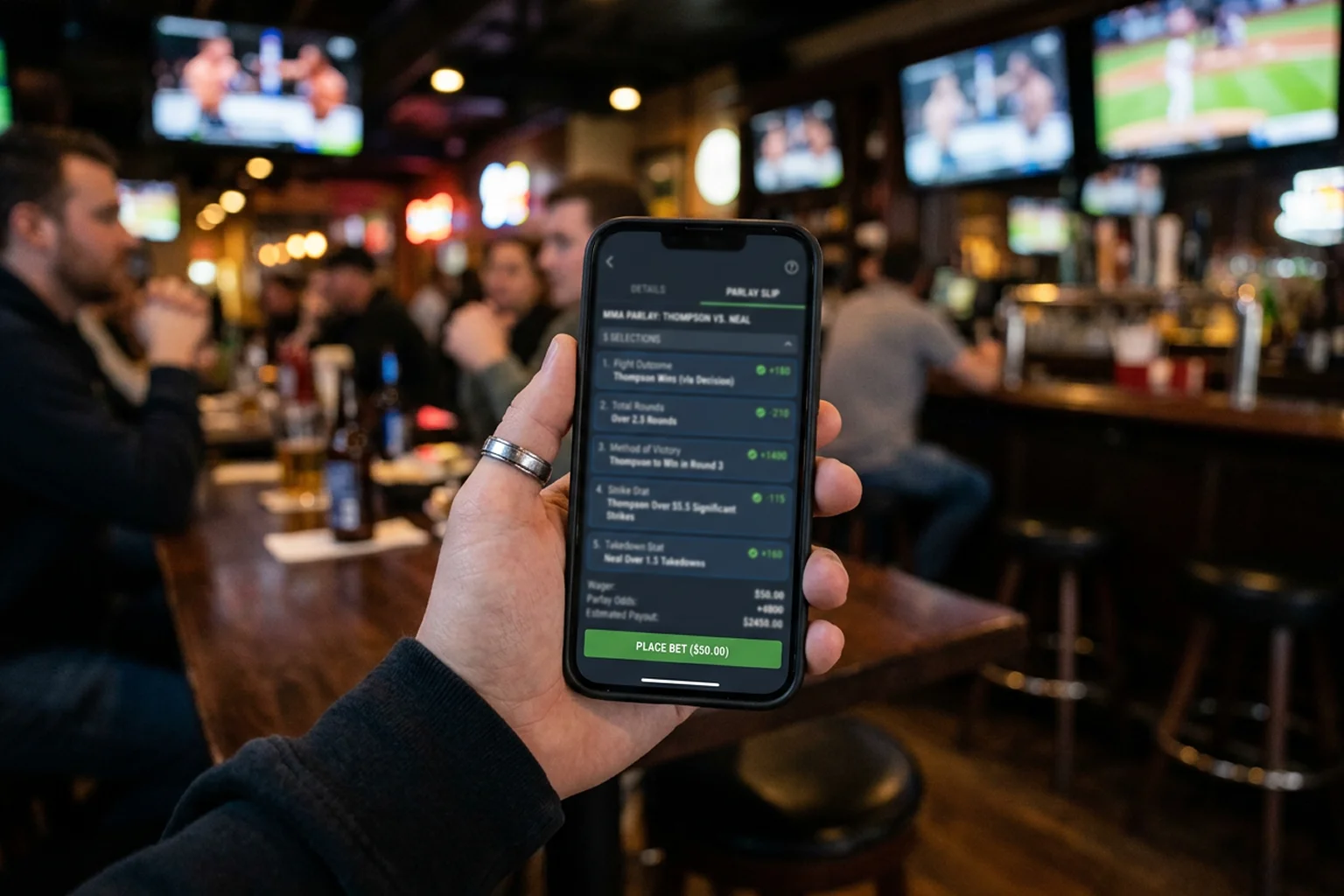
The same-game parlay changed my relationship with UFC betting. Before SGPs existed, each fight offered three or four independent betting opportunities – moneyline, totals, method of victory, round betting. You could bet them all separately, but the payouts reflected individual market pricing. The SGP lets you combine those markets within a single fight into one ticket, and the combined payout can be dramatically higher than any individual leg. The catch, of course, is that every leg must hit. But what makes UFC SGPs genuinely interesting – and different from their NFL or NBA counterparts – is that the outcomes within a fight are deeply correlated in ways the sportsbook doesn’t always price correctly.
Think about it this way: if a heavyweight KO artist wins by knockout in round one, that single result resolves the moneyline (winner), the method of victory (KO/TKO), the round betting (round one), and the total (under 1.5 rounds) simultaneously. These outcomes aren’t independent – they’re branches of the same event. A well-constructed UFC same-game parlay exploits these natural correlations to build tickets where the combined probability is higher than the sportsbook’s pricing implies.
SGP Mechanics: What the Sportsbook Allows and Blocks
The first time I tried to build a UFC SGP, I spent ten minutes frustrated because the sportsbook kept rejecting my combinations. Understanding what the platform allows and blocks saved me a lot of wasted time and redirected my energy toward combinations that actually work.
Most sportsbooks allow you to combine a moneyline pick with a method of victory, a round total, and certain fighter performance props within the same fight. The interface typically lets you tap on multiple selections from the same bout, and the SGP builder calculates a combined price in real-time. What books consistently block are combinations that are logically impossible or directly contradictory – you can’t combine “Fighter A wins by KO” with “fight goes the distance,” because a KO by definition means the fight didn’t go to a decision.
The trickier restrictions involve correlations the book wants to suppress. Some platforms won’t let you combine a moneyline with a method of victory for the same fighter because the correlation is too high and too favorable for the bettor. If you pick Fighter A on the moneyline and Fighter A by KO, the book knows those two outcomes are tightly linked and doesn’t want to pay a combined price that understates the true joint probability. Other platforms allow this combination but adjust the SGP pricing to account for the correlation, typically reducing the payout from what you’d get if the legs were priced independently.
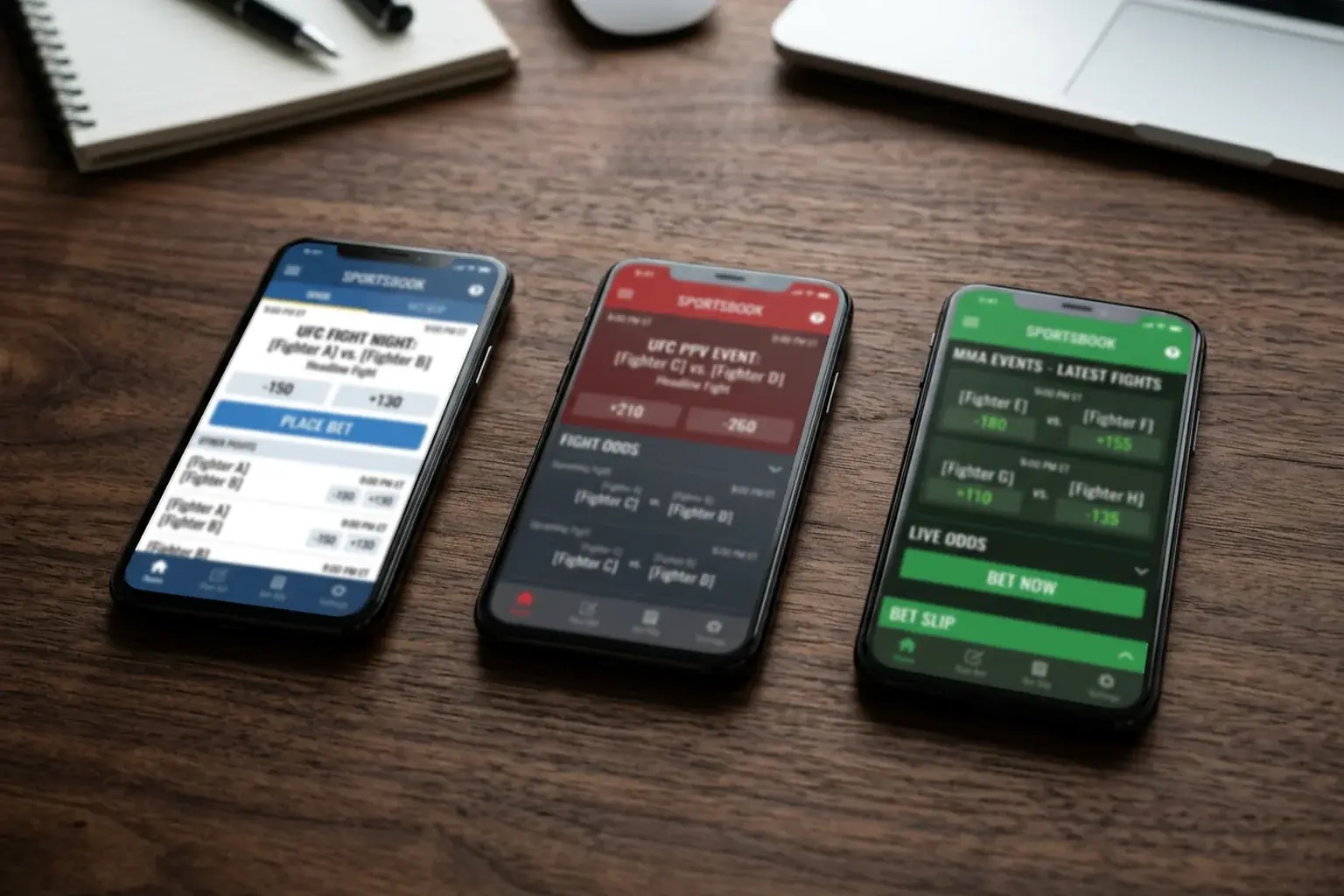
The pricing engine behind UFC SGPs is where the value either exists or doesn’t. Each sportsbook uses proprietary correlation models to calculate the combined payout, and these models vary in sophistication. I’ve found that SGP pricing diverges meaningfully across platforms for the same combination on the same fight – sometimes by 15-20% on the total payout. Checking SGP prices across two or three books before placing the bet is essential, and I often build the same SGP on multiple platforms side by side to find the best price.
Building Correlated SGP Combinations
The profitable approach to UFC SGPs is building combinations where the legs reinforce each other – where one outcome being true increases the probability of the other outcomes being true. This is the opposite of how most people use SGPs, which is to stack as many legs as possible for a lottery-ticket payout. Lottery tickets lose. Correlated combinations have a structural edge.
The strongest correlation in UFC betting links the moneyline winner to the method of victory. If you believe a specific fighter wins, the question of how they win constrains the remaining possibilities. A dominant wrestler winning against a striker will most likely win by decision or late TKO from ground-and-pound. Combining that wrestler’s moneyline with “fight goes the distance” creates a correlated two-leg SGP where both outcomes share the same underlying scenario: the wrestler controls the fight for three rounds.
Method of victory also correlates with round totals. A fight ending by submission is slightly more likely to occur after the first round than a KO – submission finishes tend to develop from scrambles and positional work that takes time to set up. About 20% of UFC fights end by submission, and the distribution of those finishes skews toward rounds two and three. Combining “submission” with “over 1.5 rounds” captures a natural correlation where the sportsbook’s pricing model may not fully account for the timing pattern. Heavyweight is the exception – the KO rate near 66% means knockout finishes overwhelmingly happen early, so KO method paired with under 1.5 rounds is the correlated play in the heavy division.
Performance prop correlations require more nuance. Significant strike totals correlate with fight duration: longer fights produce more strikes. If your SGP includes “over 2.5 rounds” and “Fighter A over 85.5 significant strikes,” you’ve built a correlated combination because a longer fight gives both fighters more time to accumulate output. The sportsbook should account for this, but many SGP engines treat the strike total and the round total as semi-independent, creating a subtle pricing edge.
Three SGP Templates for Different Fight Profiles
Rather than approaching every fight from scratch, I’ve developed three SGP templates that I apply based on the matchup profile. Each template targets a specific fight scenario and combines legs that naturally correlate within that scenario.
Template one: the grappler’s grind. Use when a strong wrestler faces a striker with limited takedown defense. Combine the wrestler’s moneyline + fight goes the distance (or over 2.5 rounds) + decision as method of victory. This three-leg SGP targets the most probable single scenario – the wrestler controls the fight on the ground for 15 minutes without a finish – and the combined payout typically ranges from +200 to +350 depending on the individual line prices. The hit rate on this template in my tracking is around 35%, which at those prices produces positive ROI.
Template two: the knockout special. Use for heavyweight or light heavyweight bouts between two aggressive strikers. Combine one fighter’s moneyline + KO/TKO as method + under 2.5 rounds. This is higher variance than the grappler’s grind but pays more because each individual leg carries more risk. I use this template sparingly – three to four times per year – and only when the matchup profile strongly favors an early finish by a specific fighter.
Template three: the value underdog. Use when you have a strong thesis on an underdog who you believe wins a specific way. Combine the underdog moneyline + the method you expect + an appropriate round total. Because the underdog moneyline already carries significant plus-money, the SGP payout on this template can exceed +600. The hit rate is low – around 15-20% in my tracking – but the payout size makes the expected value positive when the selection criteria are met.
UFC SGP FAQ
Which UFC prop combinations work best in a same-game parlay?
The most effective combinations exploit natural fight correlations. Wrestler moneyline paired with ‘fight goes the distance’ is one of the highest-hit-rate two-leg SGPs because wrestler victories and decisions are tightly linked. KO/TKO method paired with under 2.5 rounds works well for heavyweight bouts where early finishes are the norm. Avoid combining legs that are contradictory or uncorrelated, as these reduce your hit rate without proportionally increasing your payout.
Do all sportsbooks offer UFC same-game parlays?
Most major US sportsbooks now offer UFC same-game parlays, but the depth of available combinations and the pricing models vary significantly. DraftKings and FanDuel have the most developed UFC SGP builders, allowing combinations of moneyline, method, round totals, and select performance props. bet365 is expanding its UFC SGP offerings as part of its new partnership. Some smaller or state-specific books may have limited or no SGP availability for UFC events.
Created by the "Bets ufc" editorial team.