How to Read a UFC Fight Card for Betting Purposes
 Available in US
A Systematic Method for Breaking Down Any UFC Card
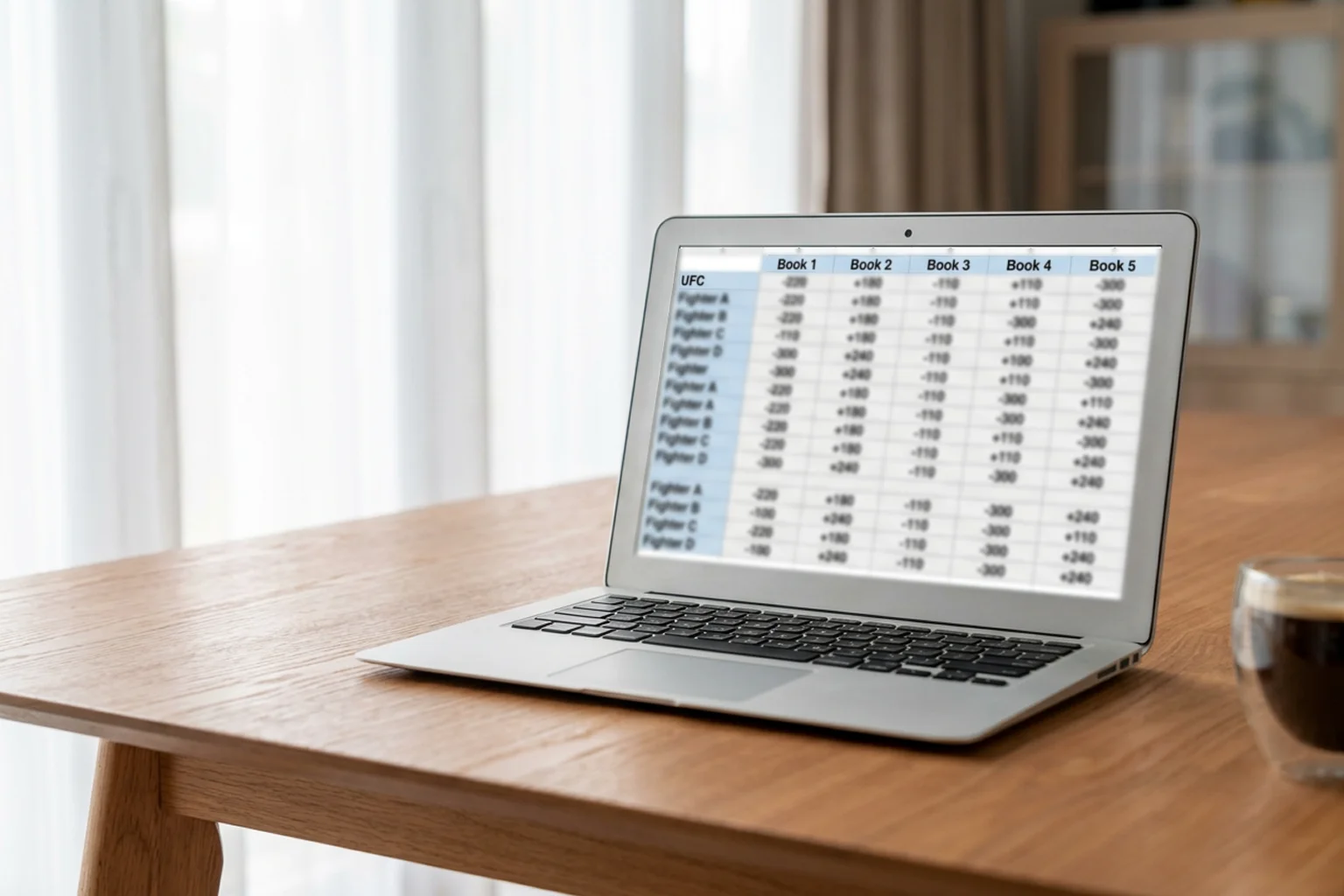
Before I developed a system, my fight card analysis was chaos. I’d read a few previews, watch some highlight reels, scan the odds, and make gut decisions thirty minutes before the event started. My results reflected that approach – inconsistent, emotion-driven, and impossible to improve because I couldn’t identify what I was doing right or wrong. The turning point came when I built a repeatable process that I apply to every card on the UFC’s 43-event annual calendar. The process takes about four hours per event, and it transformed my betting from reactive to systematic.
A structured card analysis begins the moment lines are posted – typically Tuesday or Wednesday of fight week – and concludes with a finalized bet sheet by Friday afternoon. Between those bookends, the work moves through three stages: individual fighter research, matchup grid construction, and card-level prioritization. Each stage builds on the previous one, and skipping a stage produces the same scattered, gut-level picks I was making before I had a system. The goal isn’t to bet every fight – it’s to identify the two to four fights on each card where your analysis gives you a genuine edge over the posted market price.
Fighter Metrics: What to Look Up and Where
I used to research fighters by reading their Wikipedia pages and watching YouTube compilations. That approach is fine for learning names but useless for betting. The metrics that actually predict fight outcomes aren’t featured in highlight packages – they live in statistical databases that track performance across every second of octagon time.
The core metrics I pull for every fighter on a card are: significant strikes landed per minute, significant strike accuracy percentage, significant strikes absorbed per minute, takedown accuracy percentage, takedown defense percentage, and average fight time. These six numbers, combined with a fighter’s record and recent opposition quality, give me enough data to build a baseline assessment before watching a single second of film.
Where you find these stats matters. The UFC’s official stats page provides basic numbers, but third-party databases offer more granular breakdowns – strikes by position (distance, clinch, ground), strike targets (head, body, leg), and round-by-round output trends. I cross-reference at least two sources before committing a number to my analysis because data entry errors exist and a single wrong stat can skew an entire matchup assessment.
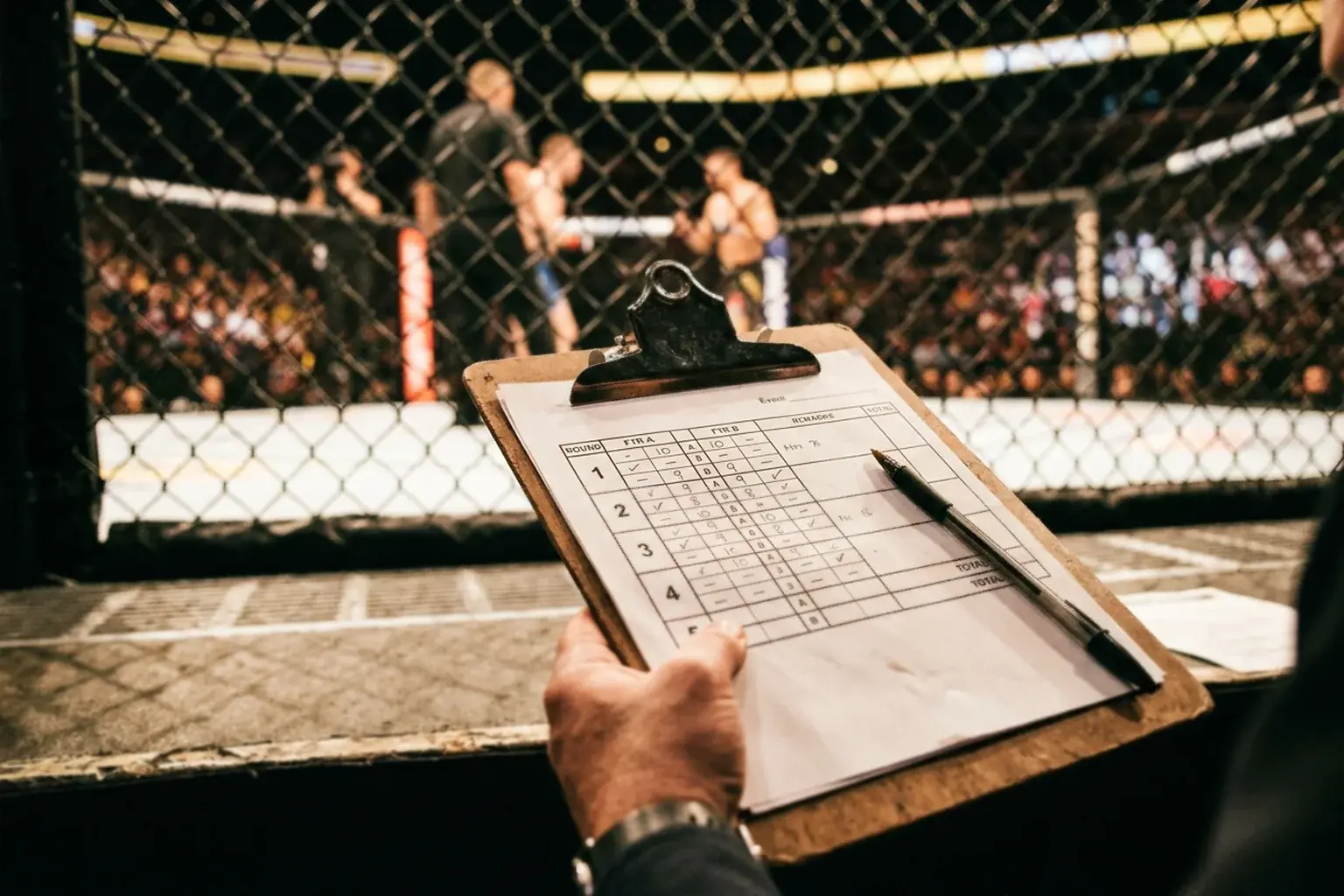
Beyond the quantitative metrics, I evaluate three qualitative factors through film study: cage movement patterns (does the fighter cut angles or back up in straight lines?), recovery ability (how do they respond after getting hurt?), and clinch behavior (who initiates and who breaks?). These qualitative reads can’t be captured in a database, but they frequently determine the outcome of fights between statistically similar opponents. I spend roughly 20 minutes per fight watching recent film, focusing on the last two or three bouts for each fighter. Anything older than two years gets minimal weight because MMA fighters evolve rapidly.
Building a Matchup Grid: Strengths vs Opponent Weaknesses
My matchup grid is a simple two-column table where I list one fighter’s strengths against the other fighter’s corresponding weaknesses. It takes ten minutes per fight and produces more useful insight than hours of unstructured analysis. The grid forces me to think in terms of specific interactions rather than general impressions.
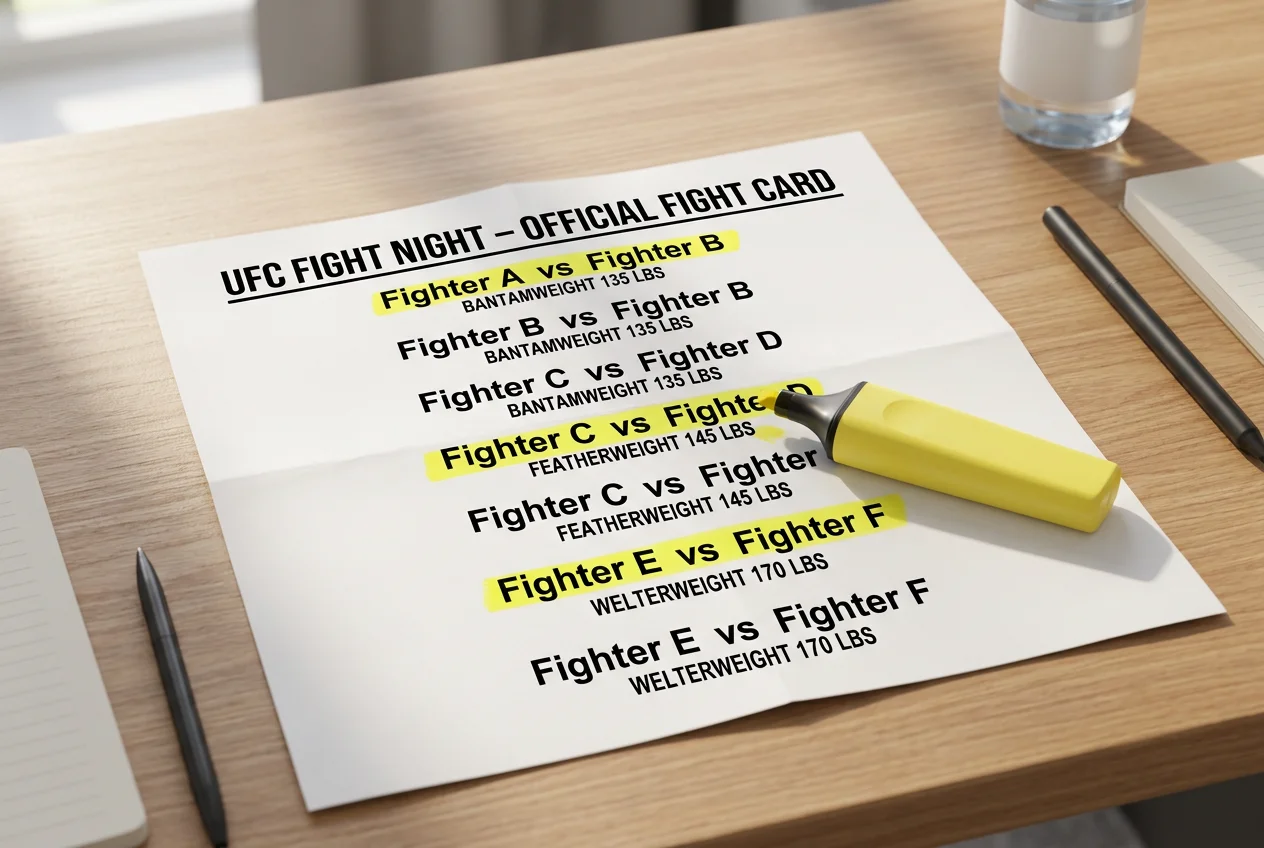
Here’s what a grid looks like in practice. Fighter A lands 5.2 significant strikes per minute but absorbs 4.8 – high output, but defensively porous. Fighter B lands 3.1 per minute but absorbs only 2.4 – lower output but much more efficient and harder to hit. The grid entry reads: “A’s volume versus B’s defense – B likely absorbs fewer strikes per round than A’s average suggests.” That single observation already shifts my totals and method of victory analysis.
The most predictive matchup factor I’ve tracked over six years is takedown defense versus takedown attempt rate. When a high-volume wrestler (4+ takedown attempts per 15 minutes) faces a fighter with takedown defense below 60%, the wrestler’s moneyline cash rate exceeds 75% in my sample. The market usually reflects this advantage in the moneyline price, but the totals and method of victory markets lag behind – the “by decision” line for the wrestler is often underpriced relative to the actual probability of a three-round grappling clinic.
Submission rate as a fight outcome sits around 20% across the UFC, but that aggregate hides enormous matchup-specific variation. A fighter with zero submission attempts in five UFC fights isn’t going to suddenly develop a ground game against an opponent with 85% takedown defense. Yet the method of victory market sometimes prices submission at +500 for fighters with no grappling pedigree, creating a free probability boost for the “by KO/TKO” and “by decision” lines. The grid helps me spot these soft prices by making the matchup-specific submission probability explicit rather than defaulting to the division average.
From Analysis to Bet Sheet: Prioritizing Selections
The hardest part of card analysis isn’t the research – it’s the discipline to rank your opportunities and bet only the best ones. After completing the matchup grids for every fight on a card, I have detailed notes on 12-14 bouts. The temptation is to find a bet in each one. The profitable approach is to rank them by edge size and bet only the top tier.
My ranking system uses a simple 1-5 confidence scale based on three factors: how much my projected probability differs from the implied probability (the larger the gap, the higher the score), how confident I am in my projection (supported by multiple data points versus based on a single read), and how much the line has already moved since opening (a line moving toward my position suggests sharp agreement, while a line moving away suggests I might be wrong).
Fights scoring 4 or 5 make my bet sheet immediately. Fights scoring 3 make the sheet only if the price is still available at a value threshold. Fights scoring 1 or 2 get passed entirely, regardless of how interesting the matchup is. On a typical card, this filtering process produces two to four bets from a 14-fight slate. Some cards produce zero qualifying bets, and when that happens, I don’t bet. The worst possible outcome of card analysis is forcing action on fights where your edge is marginal or nonexistent.
The bet sheet itself is finalized by Friday afternoon. It lists the fighter, the market (moneyline, totals, method, or prop), the target odds, and the unit size. Saturday night, I execute the sheet mechanically – no adjustments based on walkout energy, no last-minute switches based on commentary hype. The analysis was done earlier in the week when I was calm and rational. Fight night is for execution, not decision-making.
Fight Card Analysis FAQ
How long before a UFC event should I start analyzing the card?
Ideally, begin when the odds first post – typically Tuesday or Wednesday of fight week. This gives you three to four days to research fighters, build matchup grids, and finalize your bet sheet before Friday afternoon. Starting earlier than line posting is wasted effort because you cannot evaluate betting value without knowing the market price. Starting later than Thursday leaves insufficient time for thorough analysis and forces rushed decisions.
What fighter stats matter most for UFC betting analysis?
The six core metrics are: significant strikes landed per minute, significant strike accuracy, significant strikes absorbed per minute, takedown accuracy, takedown defense percentage, and average fight time. Of these, the most predictive single factor for moneyline outcomes is the interaction between one fighter’s takedown attempt rate and the opponent’s takedown defense. For totals and method of victory betting, significant strikes absorbed per minute and fight time are the strongest predictors.
Created by the "Bets ufc" editorial team.