UFC Odds Comparison: Finding the Best Lines Across Books
 Available in US
Why the Same Fight Has Different Odds at Every Sportsbook
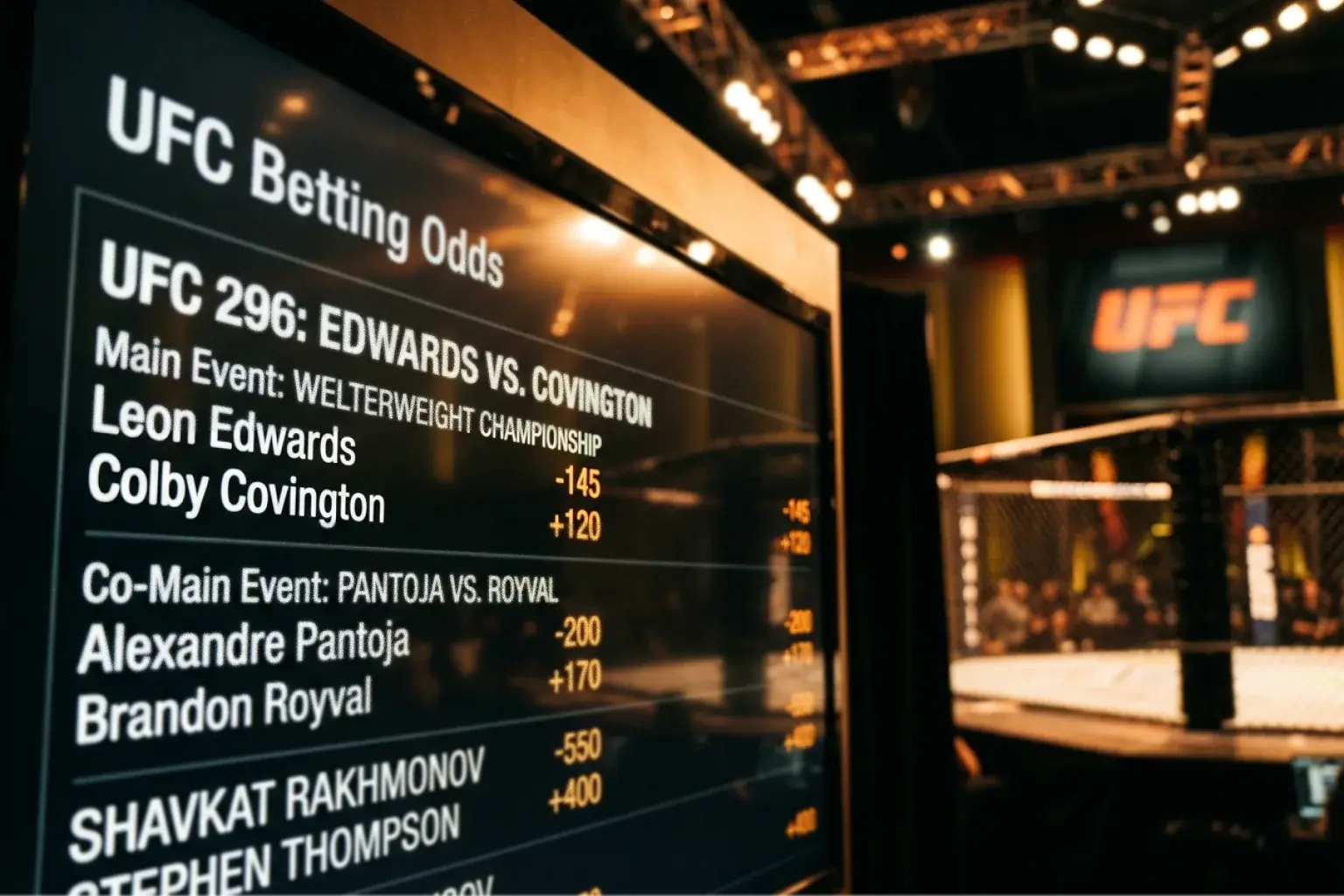
The first time I compared the same UFC fight across five different sportsbooks, I couldn’t believe the spread. One book had the favorite at -185, another at -210. That 25-cent gap on a single fight might look minor until you multiply it across every bet you place in a year. I calculated my annual loss from single-book loyalty and the number was large enough to make me open three new accounts that week.
Different sportsbooks post different odds on the same UFC fight for several reasons. Each book uses its own oddsmaking model with proprietary inputs and assumptions. Each book manages its own risk exposure – if one book has taken heavy action on the favorite, it will shade the line to attract underdog money, while a book with balanced action might post a truer price. And each book sets its own vig – the margin built into both sides of the line. The national hold percentage for US sportsbooks climbed from 8.1% in 2022 to 9.1% in 2023, and that rising margin makes line shopping even more critical.
UFC markets tend to show wider cross-book variance than NFL or NBA markets because the betting handle is smaller. When a book takes a single $50,000 bet on a UFC prelim fighter, it can shift the line by 15-20 cents. That same bet on an NFL spread would barely register. Smaller markets mean bigger price dislocations, and bigger price dislocations mean more opportunity for bettors who shop lines systematically.
How 10 Cents on the Line Compounds Over a Season
Let me make this concrete with numbers from my own records. Last year I placed 312 UFC bets. My average wager was $100. When I retroactively checked whether I’d gotten the best available line across the four books I use, I found that I’d captured the best price about 65% of the time. The other 35% of the time, a better line existed somewhere. The average improvement available on those missed lines was 11 cents.
Eleven cents sounds like nothing. On a single $100 bet at -180 versus -191, the difference in potential profit is about $3.30. Trivial. But multiply that $3.30 by the 109 bets where I missed a better line, and the total bleeds to $360 over the year. Now project that over five years of betting and the number crosses $1,800 – enough to fund an entire additional UFC card’s worth of wagers every season, earned simply by checking multiple screens before clicking “place bet.”
The compounding effect is even more dramatic for underdog bets. Getting +165 instead of +155 on an underdog represents a much larger percentage improvement in potential profit than saving the same 10 cents on a favorite. I’ve started prioritizing line shopping on my underdog plays specifically because the marginal value per bet is highest there. One extra click to check a second sportsbook, repeated consistently, produces a measurable edge with zero additional handicapping effort.
Tools and Process for Comparing UFC Lines
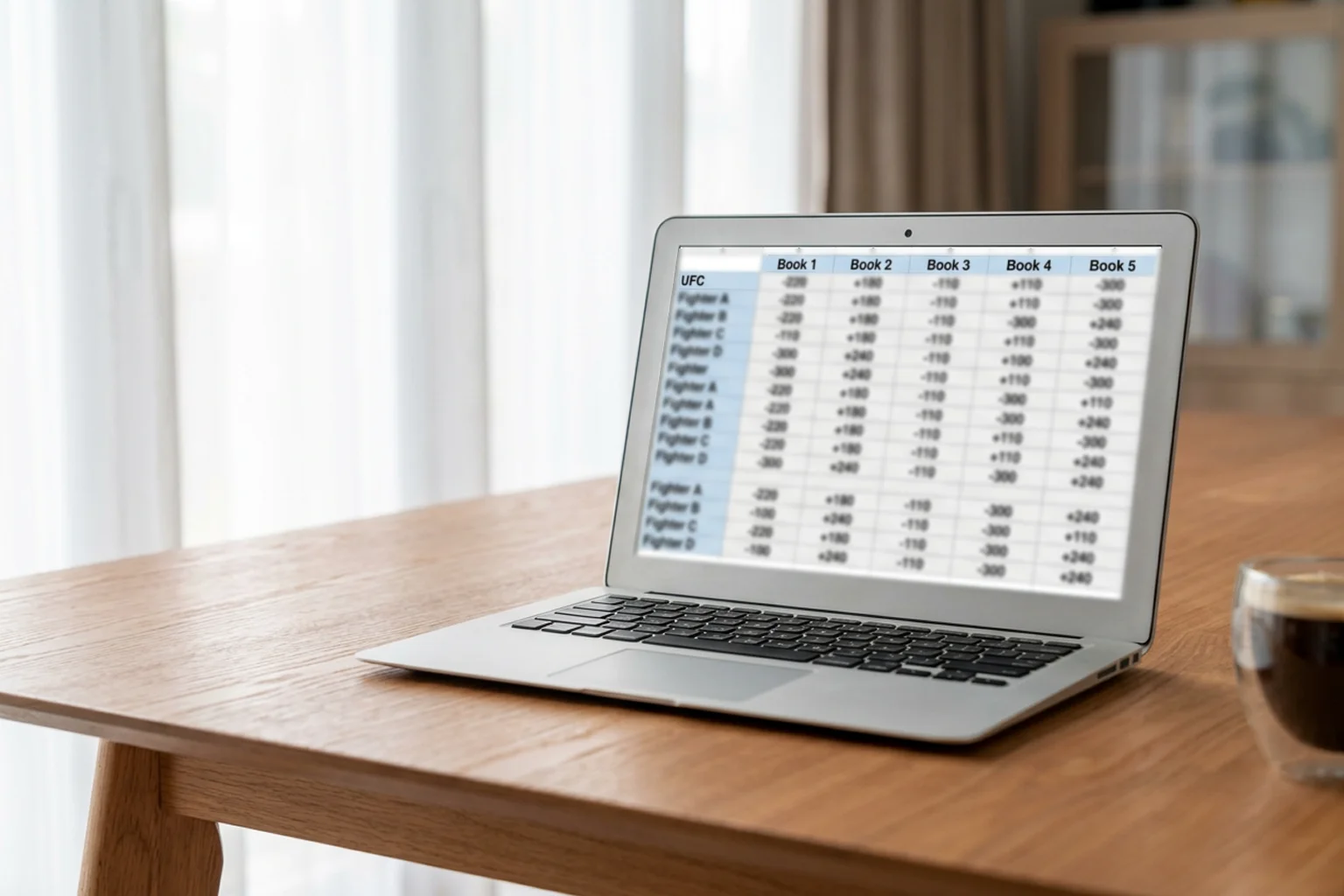
My line shopping workflow has evolved from chaotic to systematic over the years. In the early days, I’d manually open four browser tabs and scan the UFC pages at each book. It worked, but it was slow and I’d often miss the best line because I checked the books sequentially rather than simultaneously. Now I use odds comparison sites that aggregate lines from major US sportsbooks into a single dashboard.
The aggregator sites pull live odds from licensed US books and display them side by side for every fight on an upcoming card. The most useful ones highlight the best available price on each side with color coding, so you can scan a full 14-fight card in under two minutes and immediately identify where each bet should be placed. For UFC specifically, I check odds comparison tools on three occasions: when lines first post (usually Tuesday of fight week), on Thursday when sharp action has reshaped the market, and on Saturday afternoon as the final wave of public money lands.
Beyond aggregators, I maintain a simple spreadsheet where I log the line I take, the best available line at the time, and whether I captured the best price. This tracking habit serves two purposes: it quantifies how much value I’m leaving on the table, and it reveals which sportsbooks consistently offer the best UFC odds. Over twelve months of data, clear patterns emerge. Certain books consistently post the sharpest opening lines, while others consistently offer the best closing lines as they adjust more slowly to late-breaking information. Matching the right book to the right timing is an advanced form of line shopping that compounds with volume.
When to Lock In: Opening vs Closing Line Value
There’s a debate in every betting circle about whether to bet early on opening lines or wait for the close. In UFC markets, I’ve landed firmly on the early side for favorites and the late side for underdogs, and my results support this split approach.
Opening lines in UFC are set with less information than closing lines – the books haven’t yet absorbed sharp money, injury reports might be incomplete, and the public hasn’t weighed in. When I identify a favorite I want to back, I’ve found that the opening line is often 5-10 cents better than the closing line because public money tends to pile onto favorites as fight night approaches. Locking in -175 on Tuesday rather than accepting -190 on Saturday is free money if your handicapping is sound.
Underdogs follow the opposite pattern. Public money pushes the favorite’s line up (more negative), which mathematically pushes the underdog’s line up (more positive). A fighter who opens at +160 might close at +175 or even +185 if the public hammers the other side. Waiting for closing line value on underdog bets has consistently produced better entry points in my tracking. The risk of waiting is that the line can move against you if sharp money also takes the underdog – but in UFC markets, that happens less frequently than the public drift effect.
Closing line value, or CLV, is the benchmark that professional bettors use to measure their own edge. If you consistently beat the closing line – meaning you get a better price than the final number before the fight starts – you’re demonstrating genuine skill. I track CLV on every bet I place, and the fights where I capture the most CLV are overwhelmingly the ones where I bet early on a correctly identified favorite or late on a correctly identified underdog. That asymmetry alone justifies maintaining a disciplined timing strategy rather than betting everything at the same point in the week.
UFC Odds Comparison FAQ
How much do UFC odds vary between sportsbooks?
UFC odds commonly vary by 10 to 25 cents across major US sportsbooks on the same fight. In less popular fights on Fight Night undercards, the variance can exceed 30 cents. Over a full year of betting, consistently capturing the best available line adds roughly 3-5% to overall ROI compared to using a single sportsbook.
What is closing line value and why does it matter in UFC betting?
Closing line value measures whether the odds you locked in were better than the final odds at fight time. If you bet a fighter at -170 and the line closed at -190, you captured 20 cents of CLV. Professional bettors consider CLV the truest measure of long-term betting skill because it shows you consistently identified value before the market corrected. Tracking CLV over hundreds of UFC bets reveals whether your handicapping edge is real or the result of short-term variance.
Created by the "Bets ufc" editorial team.