UFC Method of Victory Bets: KO, Submission and Decision Odds
 Available in US
Why Method of Victory Is the UFC Bettor’s Edge
Most bettors I talk to treat method of victory as a novelty market – something fun to throw a few dollars at after they’ve placed their “real” bets. I used to think the same way until I realized that MOV bets were quietly delivering my best returns. The reason is structural: sportsbooks dedicate enormous resources to pricing the moneyline correctly, but the method of victory market gets less attention, less sharp action, and less sophisticated modeling. That pricing gap is where the edge lives.
Method of victory betting asks you to predict not just who wins, but how they win. The standard options are KO/TKO, submission, and decision, sometimes broken further into whether your chosen fighter or the opponent wins by each method. It adds a layer of complexity that scares off casual bettors, but for anyone who studies UFC fight styles and divisional tendencies, it’s the most exploitable market on the board.
The overall split across UFC history breaks down roughly like this: about 28% of fights end by KO/TKO, approximately 20% end by submission, and the remaining 50-plus percent reach the judges’ scorecards. Those baseline rates shift dramatically by division, by era, and by specific matchup – which is exactly what makes this market so interesting to handicap.
KO/TKO Markets: Division Knockout Frequencies
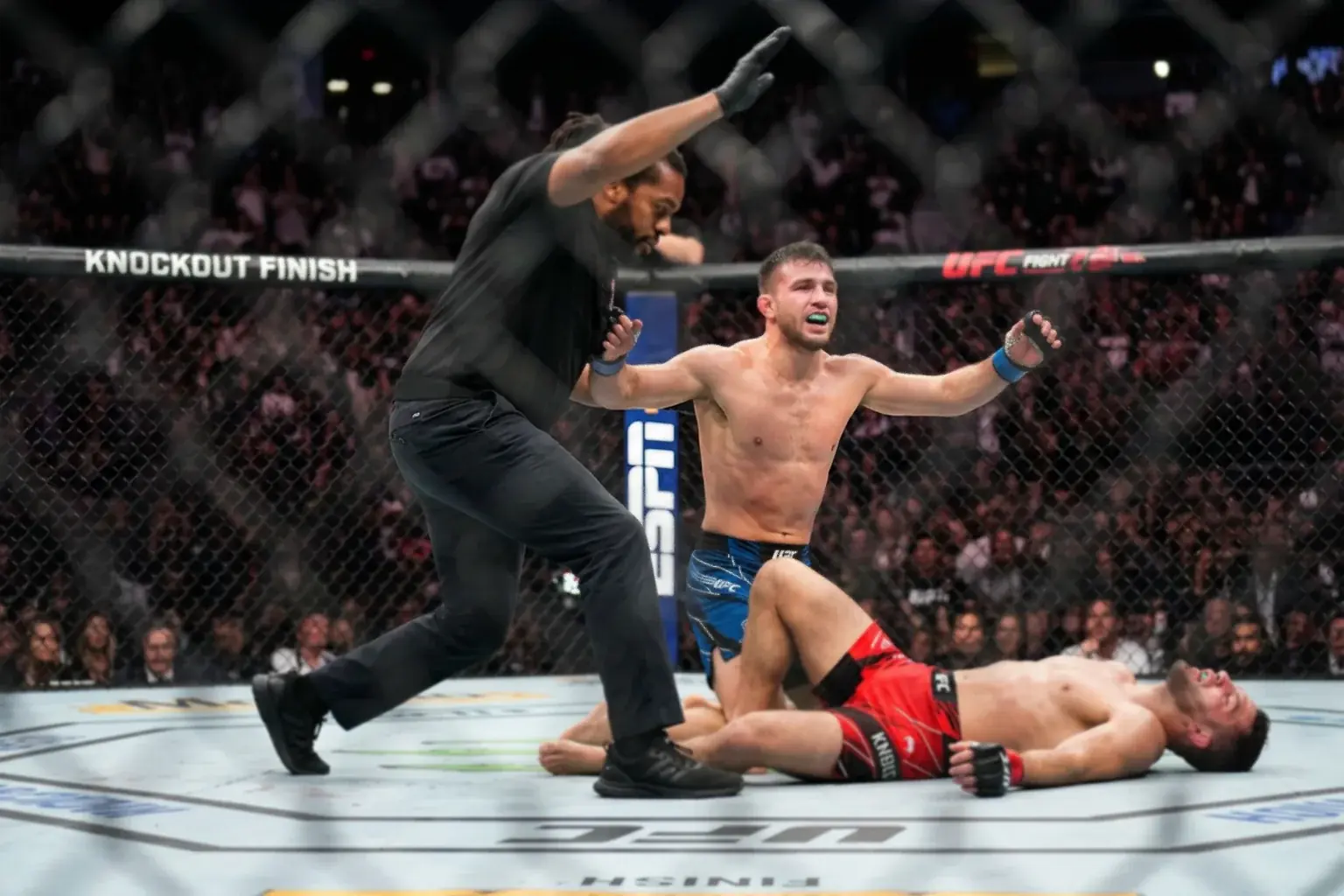
I keep a chart on my wall that tracks knockout rates by division, updated after every event. The heavyweight column always draws the eye. Nearly two out of three heavyweight bouts end by KO/TKO – the only weight class where stoppages outnumber decisions. When I’m handicapping a heavyweight fight for method of victory, the default assumption is “this fight ends early,” and I’m looking for specific reasons to bet against that default.
The knockout rate drops significantly as you move down in weight. Light heavyweight and middleweight both hover in the 35-45% range for KO/TKO finishes. Welterweight sits around 30%, and by the time you reach lightweight, you’re looking at a division where barely a quarter of fights end by knockout. Those numbers matter because the MOV market doesn’t always reflect them accurately. I’ve seen lightweight bouts where KO/TKO by the favorite was priced at +200 when the base rate for knockouts in that division – let alone from that specific fighter – suggested the true probability was well below the implied 33%.
The most profitable angle I’ve found in the KO/TKO market involves counter-strikers facing aggressive pressuring opponents. The book often prices the aggressive fighter’s KO potential higher because highlights stick in the public memory, but counter-strikers historically produce stoppages at equal or higher rates against forward pressure fighters. The mechanics are simple: the harder someone rushes in, the more devastating the counter.
Submission Finishes: A Declining but Valuable Market
Here’s a trend that has quietly reshaped how I bet on UFC: the submission rate across the promotion sits at roughly 20%, and that number has been declining for years. The evolution of MMA training means almost every fighter entering the UFC now has competent submission defense. The days of pure grapplers tapping out strikers with basic chokes are largely over. What remains are specialists – elite ground artists who can finish from positions that most fighters never practice defending.
That declining rate creates a pricing opportunity. Books still post submission odds based partly on historical norms that no longer apply. When they see a black belt on the card, they’ll often price submission by that fighter at a level that made sense five years ago but overestimates today’s likelihood. The flip side is also true: when a fight features two fighters with minimal submission threat, the “decision” line can be underpriced relative to the actual probability. The analyst Din Thomas captured this dynamic well when discussing grappling matchups, noting that the ability to reverse positions and control from top is what separates finishers from fighters who merely threaten on the ground.
For a deeper statistical breakdown of grappling trends and how they affect betting markets, I’ve written a dedicated piece on UFC submission betting that covers the historical data in detail.
Decision Bets: Where Patience Pays
Nobody posts decision bet wins on social media. There’s no highlight reel, no dramatic moment to screenshot. And that’s exactly why this part of the MOV market offers consistent value – the public systematically undervalues fights going the distance because decisions aren’t exciting to root for.
Lightweight leads all divisions with 47% of bouts reaching the judges. Welterweight is close behind. When two high-output, defensively responsible lightweights meet in a three-round fight, the probability of a decision is often north of 55% once you account for the specific matchup dynamics. If the book is pricing “decision” at +110 or better in those spots, you’re getting a mathematical edge on what amounts to the most likely individual outcome.
My approach to decision betting centers on identifying fights where both participants have three characteristics: high output (they stay active enough that the referee never looks for a stoppage), strong chins (they absorb damage without getting dropped), and takedown defense above 70% (ground-and-pound stoppages are unlikely). When all three boxes check for both fighters, I bet the decision confidently. Over the past two years, this simple filter has produced a decision-bet hit rate above 60%, which at plus-money odds translates to meaningful profit.
One overlooked angle in decision betting: five-round main events between elite fighters produce decisions at an even higher rate than three-round fights between comparable talent. The extra two rounds give both fighters more time to settle into safe patterns, and championship-level competitors rarely take the kind of reckless risks that lead to late stoppages. When two ranked lightweights or welterweights headline a card, the decision line often represents the single most probable outcome on the board.
The method of victory market rewards specialization. Pick one or two methods, learn the divisional base rates, build a checklist for matchup indicators, and ignore the methods that don’t fit your analysis. Trying to handicap all three outcomes on every fight is a recipe for analysis paralysis. Depth beats breadth in this market every single time.
Method of Victory FAQ
What are the odds payouts for method of victory bets in UFC?
Payouts vary widely depending on the perceived likelihood. A KO/TKO by a heavyweight knockout artist might pay +150 to +200, while a submission by a non-grappler could pay +800 or more. Decision bets typically range from +100 to +250 in competitive matchups. The less likely the method for a given fighter, the higher the payout – which is where informed bettors find the most value.
Which UFC division has the highest submission rate?
Historically, the lighter weight classes – particularly bantamweight and featherweight – have produced submission rates slightly above the UFC-wide average of roughly 20%. However, the overall submission rate has been declining across all divisions as MMA training has evolved. The fighters who still finish by submission tend to be elite specialists rather than simply competent grapplers.
Created by the "Bets ufc" editorial team.